FROM THE SHOOTING FLOOR
What we’ve learned from filming professional interviews -
Interview filming looks simple until the cameras roll. The room, the question, the contributor’s confidence, the sound and the edit all affect what happens next. These are some of the lessons we’ve picked up from filming real interviews across corporate, documentary, public-sector and event productions.
INTERVIEW FILMING NOTES
FIRST-HAND PRODUCTION EXPERIENCE
QUICK TAKEAWAYS
Eight things we think about before the first proper answer
LESSON 01
Even confident people can become nervous on camera
One of the easiest assumptions to make is that somebody who speaks for a living will automatically be relaxed in front of a camera. In our experience, that is not always true. Actors, senior managers and experienced presenters can all become self-conscious once the lights, microphones and cameras are pointed at them.
We find that rushing straight into the first serious question rarely helps. A few minutes of ordinary conversation can change the atmosphere completely. The contributor stops thinking about the equipment and starts talking to another person again.
The aim is not to rehearse every word. It is to give them enough time to settle so the first useful answer does not arrive ten minutes after filming begins.
LESSON 02
The question shapes the edit
People generally answer the question they are asked. If the question is too broad, they may give a long answer that wanders. If it is too narrow, the answer may be accurate but useless in the finished film.
One lesson we have learned is to think about the edit while the interview is happening. Sometimes the best thing to ask for is not more detail, but a shorter self-contained version that can stand on its own once the interviewer’s voice has been removed.
With several contributors, we also try not to ask everybody exactly the same thing. Dividing subjects between people often gives the finished film more range and less repetition.
LESSON 03
A bigger room can improve the interview before any light is switched on
We have filmed in plenty of small meeting rooms where the tripod is almost against the wall, furniture has to be moved and there is barely enough distance between the contributor and the background.
It can still be made to work, but space gives you choices. It allows a longer lens, more separation, somewhere to put a back light and more control over what appears behind the contributor.
If an office has no suitable room, hiring a larger meeting room or studio for a few hours can sometimes improve the final result more than spending the same money on another piece of equipment.
LESSON 04
There is no single correct eyeline
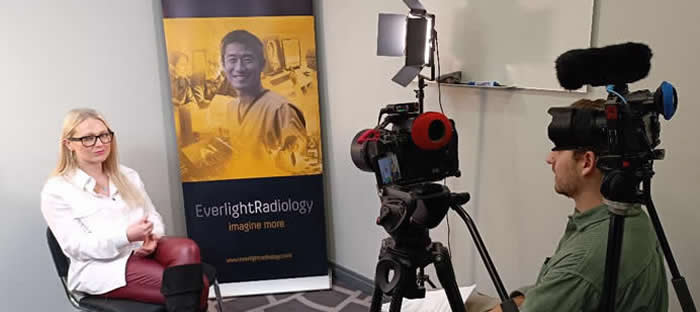
A conversational interview normally feels natural when the contributor looks towards an interviewer sitting just beside the camera. A direct-to-camera message feels completely different because the speaker is addressing the audience rather than another person in the room.
We have also learned that the eyeline needs to be decided for the finished piece, not simply because one setup is familiar. If several people are being interviewed, alternating framing or eyeline can help the edit feel more varied, provided the choices still make visual sense together.

LESSON 05
The person behind the camera has to stay calm too
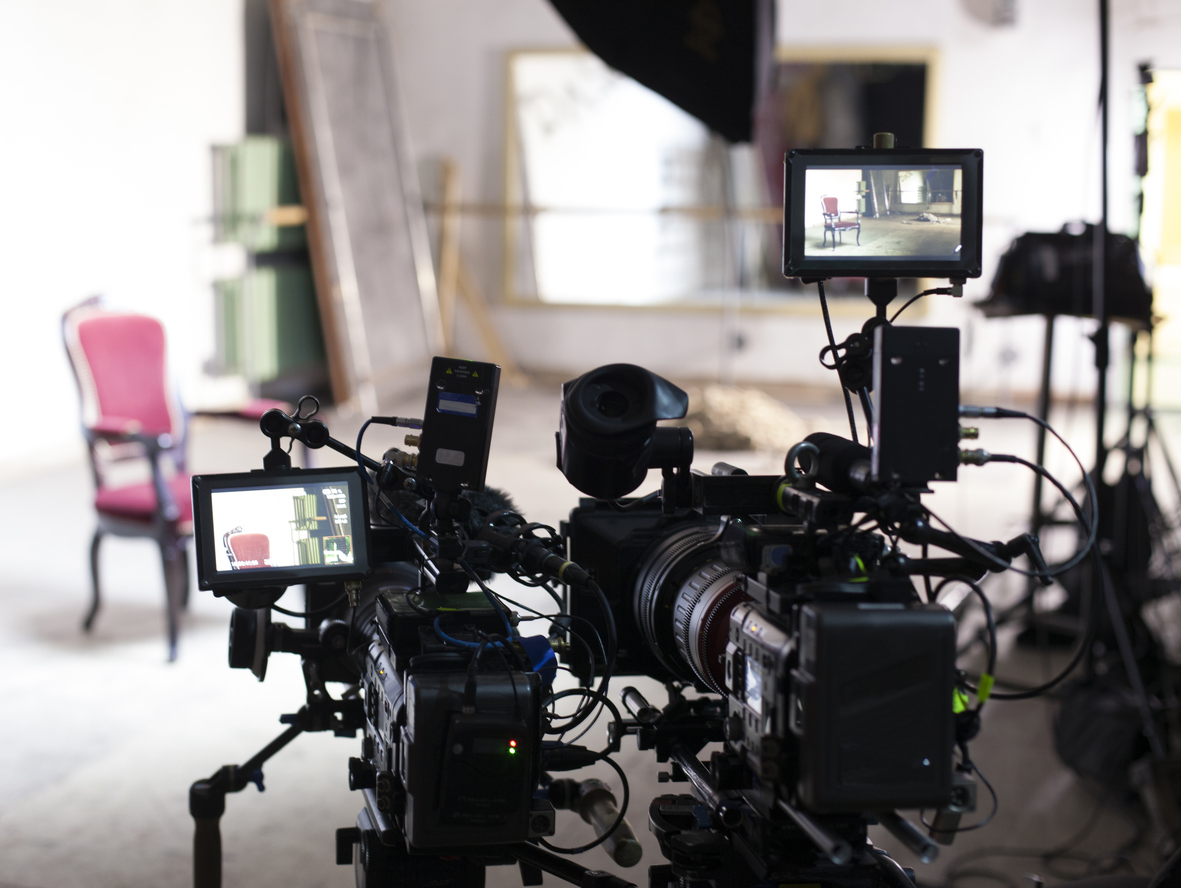
During an interview, the crew may be checking two camera recordings, focus, exposure, lav and boom audio levels, background noise and whether the answers are actually useful. If somebody behind the camera becomes visibly tense, the contributor can feel it too.
We have had the unpleasant moment of discovering that a second camera has stopped recording. Experiences like that make you much more disciplined about checking record indicators, card space, batteries and audio before settling into the conversation.
The technical side matters, but it should not dominate the room. Good preparation leaves more attention available for the person speaking.
LESSON 06
Sound problems are often less forgiving than picture problems
Air conditioning, machinery, traffic, doors, footsteps and people talking nearby can all affect an interview. Sometimes the client still has to keep the workplace running, so complete silence is simply not realistic.
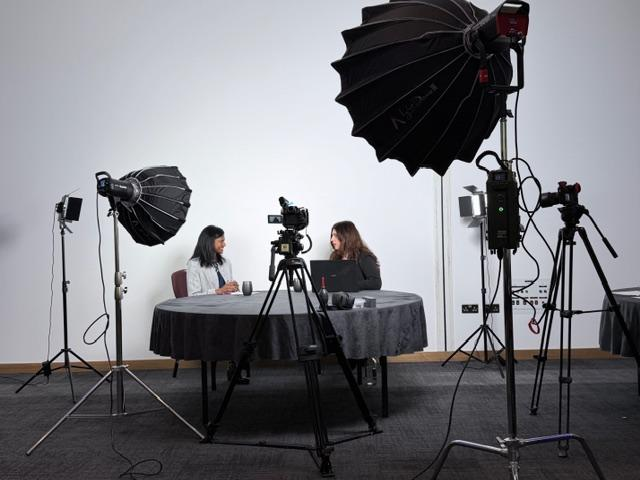
For sit-down interviews we often think in terms of two useful microphone positions. A lavalier microphone gives a close, consistent recording and is practical when the contributor may move slightly. A boom microphone can sound more open and natural when it can be positioned close enough without entering the frame.
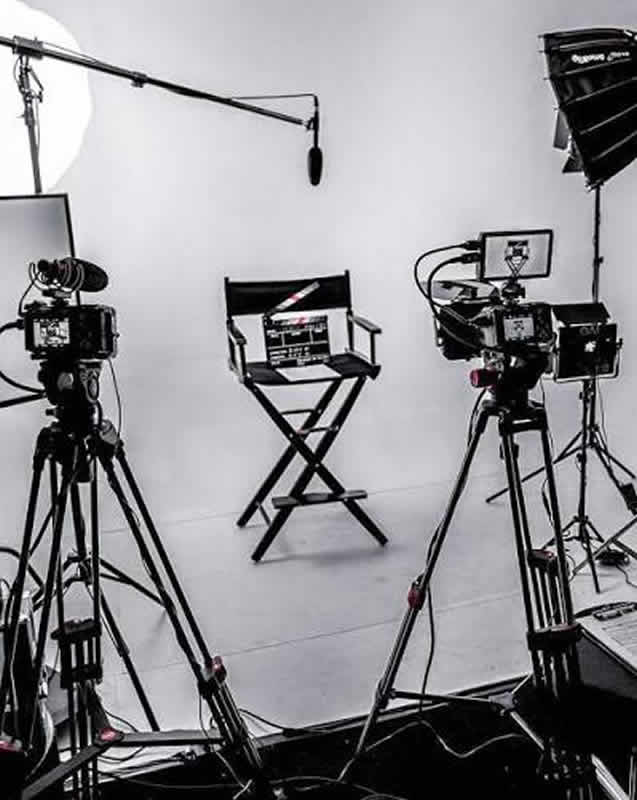
Where the room and access allow, we can suspend the boom from a boom arm on a C-stand rather than asking somebody to hold it for a long interview. That keeps the microphone position consistent and keeps another person out of the contributor's eyeline.
Modern noise-reduction software is extremely useful and can rescue recordings that would once have been difficult to use, but it is not magic. A person shouting over the top of an answer is still a person shouting over the top of an answer.
Our preference is always to improve the recording at source: choose the quietest practical room, place the microphone properly and listen before filming starts.
LESSON 07
Wardrobe and background belong in the same conversation
A white shirt against a pale wall can disappear into the background. Dark clothing against a very dark background can do the same thing. Busy patterns can also become distracting on camera.
We do not believe everybody needs to dress like a presenter. The better question is how they want to come across. Formal in a suit, relaxed at a desk, standing in a working environment or sitting in a more controlled interview setting can all be right choices for different messages.
The background helps tell the viewer who this person is before they have said anything.
LESSON 08
The location decides how much equipment is sensible
There is no prize for bringing the biggest lighting package if the room is on the fifth floor, the lift is tiny and the car is parked ten minutes away.
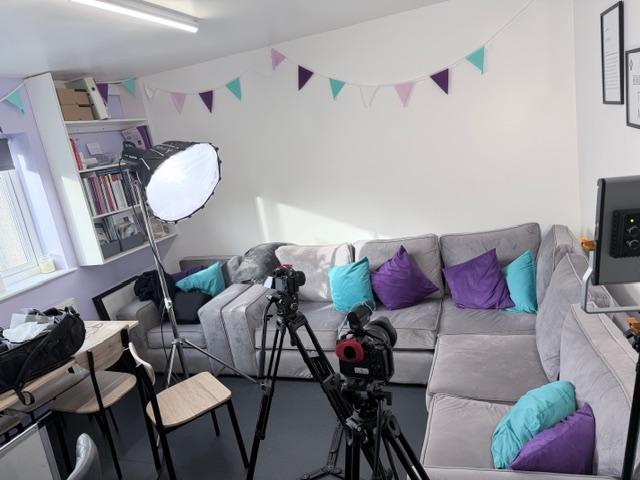
We have learned to treat access as part of the technical plan. For awkward locations, a compact camera kit, radio microphones, lightweight support and LED lighting may be the sensible choice. If access is straightforward and the room warrants it, we can bring a much larger package.
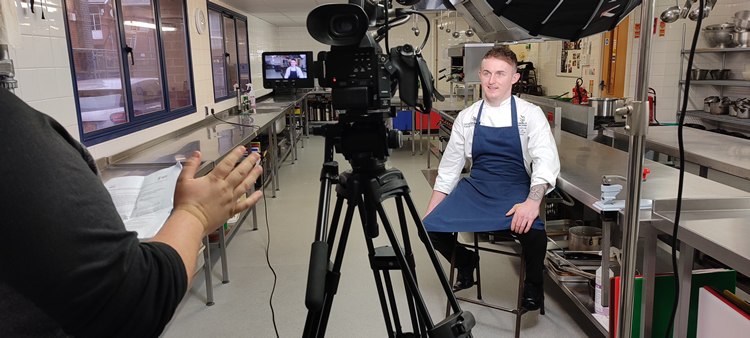
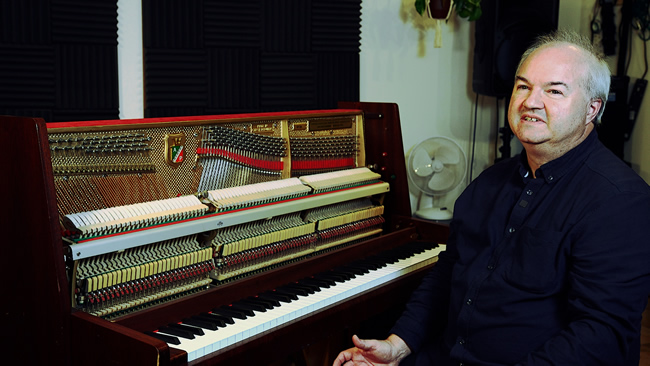
The setting itself can also do some of the storytelling. Where it suits the subject, we prefer to interview people with something relevant in the frame — for example, a musician beside an instrument, an engineer near the process they are describing or a business owner in their own working environment. It gives the viewer context immediately and is often more interesting than placing everybody against a generic wall.
The production should scale to the location, not the other way around.
THE BIGGEST LESSON
The best interview setup is the one that helps somebody give a useful answer
It is easy to become obsessed with cameras, lenses and lights. They matter, but they are there to support the interview rather than become the interview.
In our experience, the strongest results usually come from getting the room right, giving the contributor time, asking useful questions and thinking about the edit while the conversation is still happening.
RELATED SERVICES
Need the interview filmed professionally?
MJ Films provides interview filming across the UK, from stand-alone interview shoots to interview-led productions with supporting footage and editing.
Professional interview filming →
Interview & B-roll filming →