
CASE STUDY VIDEO PRODUCTION LONDON
Turn a customer experience into evidence people can see.
Interview-led case study films for London businesses, charities and organisations — combining natural conversation with the real workplace, product, service or project being discussed.
The strongest case studies move beyond praise. They show the situation, the problem, what was done and what changed, with enough relevant b-roll to make the story credible rather than leaving every claim on the contributor’s shoulders.
MORE THAN PRAISE
A case study needs a situation, not just a compliment
A useful customer story explains what was happening before, why a decision was made, what the experience was like and what changed afterwards.
CASE STUDY OR TESTIMONIAL?
A case study has more to prove
A testimonial can simply say that a company did a good job. A case study gives the viewer a situation, a challenge, an approach and an outcome, with the person involved explaining what happened in their own words.
For organisations using our London video production service, that might mean a software customer explaining what changed, a charity showing how a service works in practice, a healthcare team discussing a new process, or a client describing how a supplier handled a difficult project.
The aim is not scripted praise. It is a credible account of what was needed, what happened and why the product, service or organisation mattered.
THE STORY AND THE PROOF
The conversation tells it. The b-roll proves it.
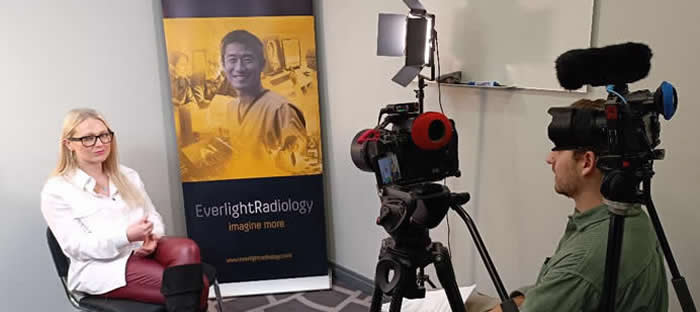
The interview gives the film structure. Supporting footage gives the edit context, evidence and visual flexibility.
01 · INTERVIEW
The conversation gives the story its voice
Natural answers uncover the problem, the decision, the experience and the result in the contributor’s own language.
02 · B-ROLL
The supporting footage shows the proof
Workplaces, software, equipment, services, people and processes give the viewer visual evidence instead of asking them to accept every claim on trust.
FOUR-HOUR SHOOT
What can fit into a focused half-day
One main London location
One or two contributors
Interview setup
Workplace / product b-roll
Establishing shots and detail
A FOCUSED HALF-DAY APPROACH
A four-hour London case study can be enough
Many straightforward case study videos can be filmed in around four hours when there is one main location, one or two contributors and useful activity to capture nearby.
Where the brief calls for a carefully lit seated interview, more time is sensible. Cameras, lighting, sound and the background can take longer to build properly than people expect, particularly in offices that need adapting rather than being treated as ready-made studios.
A formal sit-down is not the only option. A contributor standing in the workplace, beside the product or in the environment being discussed can feel more immediate and less staged.
CASE STUDIES IN PRACTICE
Different stories, same principle
The questions, location and supporting footage are shaped around what the organisation needs the audience to understand.
IT & SOFTWARE
Show the workflow
Film how a client actually uses the platform, what it replaced, where it saves time or solves a problem, and how staff experience it day to day.
HEALTHCARE
Explain a service or process
Combine interviews with appropriate workplace footage, demonstrations and real environments while respecting access, privacy and permissions.
CHARITIES
Put real experience behind the facts
Staff, volunteers, partners or service users can explain the challenge, support provided and what changed, while b-roll shows the work taking place.
RECRUITMENT
Show the real working experience
Employees can explain the role, team, challenges and progression while the film shows the workplace and people behind the job.
MORE THAN ONE OUTPUT
One shoot can create more than one useful film
The main story can sit on a website or sales page, while individual answers can become shorter clips for LinkedIn, presentations, recruitment, internal communications or campaign content.
HOW THE STORY IS BUILT
From brief to finished London case study
01 · STORY
Find the story
Establish what changed, who experienced it, what the audience needs to understand and which parts can be shown on camera.
02 · QUESTIONS
Plan the conversation
Agree themes without forcing contributors to memorise a script. The aim is clear, useful answers in their own language.
03 · FILMING
Film interview and b-roll
The interview provides the narrative while supporting footage shows the workplace, product, service, people or process being discussed.
04 · EDIT
Build the case study
Shape the strongest answers into a concise story, then support them with relevant b-roll, titles, captions and graphics.
FILMING CASE STUDIES IN LONDON
Make the location work for the story
The most useful location is usually the place where the story can actually be shown: the office, customer site, project location, workplace or environment where the product or service is used.
01 · SOUND
Protect the interview from noise
A visually impressive room is no use if the contributor cannot be recorded cleanly. Room choice should consider interruptions, privacy and acoustics as well as appearance.
02 · TIMING
Film the evidence while it is available
If the customer, equipment, service or activity is only available briefly, build the schedule around that first rather than leaving b-roll until the end.
03 · TRAVEL
Keep several London locations realistic
More than one location can strengthen a story, but every move costs setup time. If several places matter, allow enough time rather than compressing the interviews and supporting footage.
CASE STUDY QUESTIONS
Case study video production London FAQs
Practical answers about interview styles, b-roll, half-day filming and London locations.
Useful to send with an enquiry
• London location
• Preferred filming date
• Contributor names / roles
• What changed or was achieved
• Activity available for b-roll
• Main film and shorter outputs
Can a London case study be filmed in four hours?
Yes. A focused case study with one main location, one or two contributors and useful b-roll nearby can often be filmed within a four-hour booking. More time is recommended when the interview needs a larger lighting setup, several contributors, multiple rooms or extensive supporting footage.
Does a case study need a seated interview?
No. A controlled seated interview can look excellent when there is enough time and space to light it properly, but it is not automatically the best choice. Standing interviews in the workplace or beside the product can feel more immediate and less staged, particularly when the location itself is part of the story.
Do contributors need to memorise answers?
No. Case studies usually work better as guided conversations. We can agree the important subjects and questions beforehand, then let the contributor answer naturally in their own words rather than trying to perform a script.
What makes a case study video feel credible?
Credibility comes from specific answers and relevant evidence. Rather than relying on general praise, the contributor should be able to explain the original problem, what happened, what changed and what the experience was like. B-roll of the real workplace, product, service, people or process gives those answers visual context and makes the finished film more convincing.
Can a case study cover several London locations?
Yes. A story can include a customer site, office, project location or other relevant London setting. Multiple locations need additional time for travel, access and resetting equipment, so they are usually better planned as a longer day rather than compressed into a four-hour shoot.